


全球观众
2025 年更新
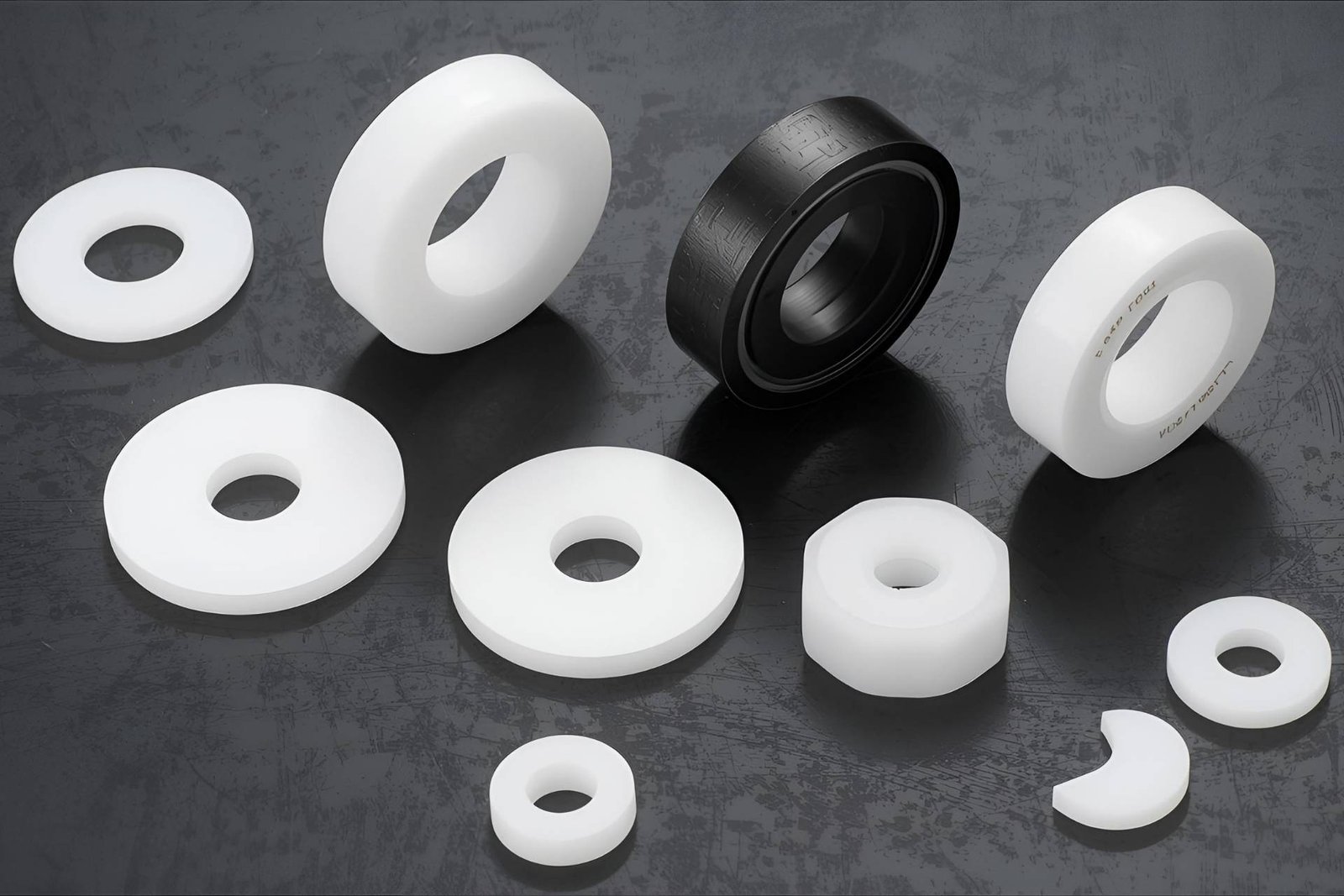
对聚四氟乙烯垫圈与不锈钢、黄铜、尼龙、PEEK、纤维/层压板和弹性体衬底设计的对比分析。重点是可测量的差异:耐化学性、摩擦、蠕变、介电行为和生命周期成本。.
Executive summary: where PTFE stands out
- Near‑universal chemical resistance and negligible water uptake (<0.01%/24 h) give PTFE an edge in corrosive or sanitary environments.
- Low surface energy delivers a friction coefficient around 0.05–0.10 vs polished steel—useful for anti‑galling and controlled slip.
- Trade‑off: creep (cold flow) under sustained load; mitigated with glass/carbon/bronze fillers and backup washers.
- Electrical isolation performance (dielectric strength ~60–100 kV/mm) is significantly higher than metals and higher than many engineering plastics in wet service.
For engineered selections and custom cuts, see SPARTA 密封件 or the company profile of the 密封公司.
Side‑by‑side material comparison
| Washer material | Chemical resistance | Typical friction vs. steel | Creep/elastic recovery | Electrical behavior | Temperature window (continuous) | Core advantages | Typical drawbacks |
|---|---|---|---|---|---|---|---|
| PTFE (virgin) | Excellent (most acids/bases/solvents) | 0.05-0.10 | High creep; no elastic recovery | Insulating, high resistivity | −200 to +260 °C | Non‑stick, sanitary, dielectric | Torque relaxation; needs larger bearing area |
| PTFE (filled) | Very good | 0.08-0.20 | Reduced creep | Insulating (slightly lower) | −200 to +260 °C | Better preload stability | Abrasive; chemical window narrows (bronze) |
| Stainless steel (304/316) | Good to excellent (not universal) | High (galling risk) | Very low creep; structural | Conductive | −200 to +400 °C+ | High clamp, durability | No chemical/electrical isolation; potential corrosion |
| Brass | Good in water/non‑oxidizing | Medium | Very low creep | Conductive | −100 to +200 °C | Machinability, cost | Stress corrosion in ammonia; tarnish |
| Nylon (PA6/PA66) | Fair; hydrolysis/solvent limits | Medium | Moderate creep; absorbs moisture | Insulating (drops when wet) | −40 to +120 °C | Low cost, light weight | Dimensional drift, UV sensitivity |
| PEEK | Very good | Medium | Low creep; high modulus | Insulating | −50 to +250 °C | Strength, precision, heat | Higher price than PTFE |
| Fiber/laminate (G10/FR4) | 良好 | Medium | Low creep | Excellent insulation | −50 to +150 °C | Rigidity, electrical | Chemical limits; edge wicking if unsealed |
| 聚四氟乙烯护套弹性体 | Face has PTFE chemical resistance | Low | Good elastic recovery (core) | Insulating | Core‑limited (e.g., EPDM/FKM) | Leak‑tight on rough faces | Higher cost; thickness control |
Measured differences: property bands and test methods
| 财产 | 聚四氟乙烯 | Nylon | PEEK | Stainless | Method/notes |
|---|---|---|---|---|---|
| Density (g/cm³) | 2.13–2.20 | 1.13–1.15 | 1.30 | 7.9–8.0 | ASTM D792 (metals by mass/volume) |
| Tensile strength (MPa) | 20–35 | 60–80 (dry) | 90–100 | >500 | ASTM D638; metals per ASTM A standards |
| Elongation at break (%) | 200–400 | 40–100 | 20–50 | ~40 | ASTM D638 |
| Shore hardness | D 50–60 | D 70–80 | D 85–90 | — | ASTM D2240 |
| Coeff. of friction vs steel | 0.05-0.10 | 0.2–0.4 | 0.2–0.4 | 0.5–0.8 (dry) | ASTM D1894(类似标准) |
| Water absorption 24 h (%) | <0.01 | 1–2+ | 0.1 | 0 | ASTM D570 |
| Dielectric strength (kV/mm) | 60–100 | 15–30 (drops when wet) | 20–25 | Conductive | ASTM D149 |
| Continuous service temp (°C) | −200…260 | −40…120 | −50…250 | −200…400+ | Manufacturer data/standards |
Bands represent common datasheet ranges; confirm with supplier certificates before final design.
Decision tree: choosing between PTFE and the rest
Choose PTFE when
- Process media include acids, bases, halogenated solvents, or cleaning agents where nylons/PEEK may swell or stress‑crack.
- Electrical isolation and non‑wetting surfaces are critical (sensors, RF hardware, mixed‑metal joints).
- Cryogenic service or rapid temperature swings demand low brittleness and moisture immunity.
Choose a different material when
- High clamp with minimal relaxation is mandatory—prefer stainless or PEEK, or use filled PTFE with steel backups.
- Leak‑tight cyclic sealing is required—use PTFE‑jacketed elastomer or expanded PTFE gaskets rather than plain washers.
- Sliding PV is high and continuous—use filled PTFE bearing grades or engineered bearing polymers.
Design implications unique to PTFE
- Geometry: larger OD/ID ratios (≥1.8) for virgin PTFE under high preload; 1.5 may suffice with filled grades.
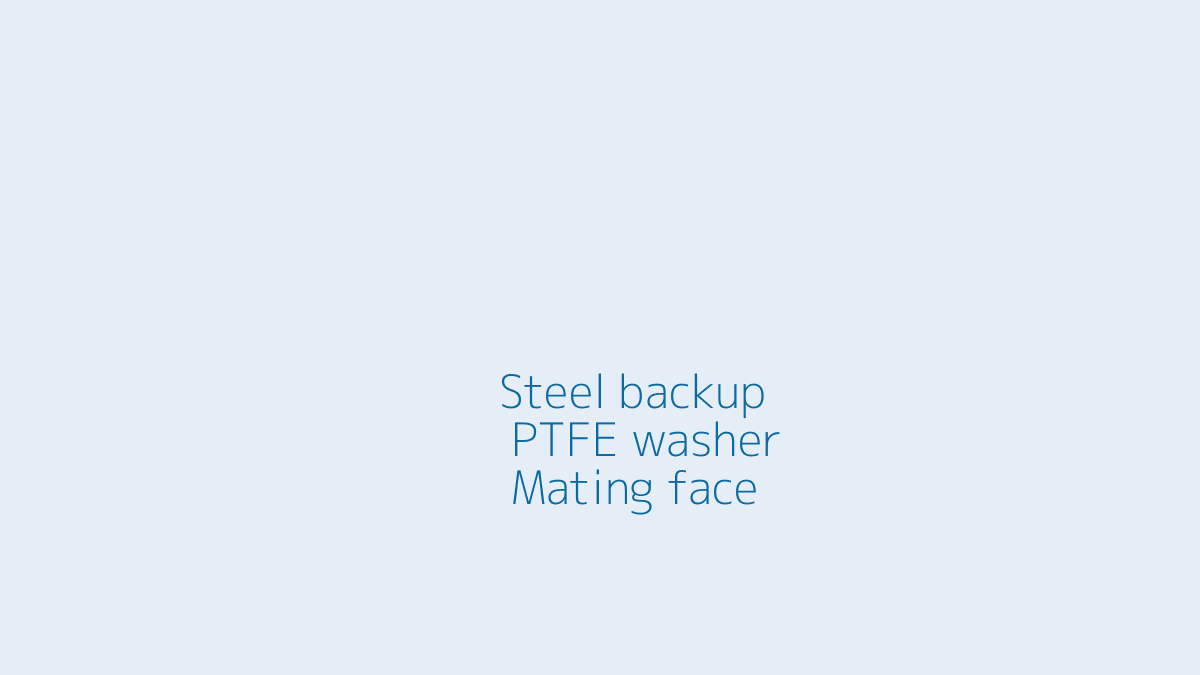
- Backup hardware: a stainless or coated steel washer under the nut/bolt head raises interface friction and curbs creep.
- Surface prep: keep Ra ≤ 3.2 μm; deburr edges; avoid sharp transitions that seed extrusion.
- Retorque plan: inspect after first heat‑soak or 24–48 hours; ASTM F38 creep‑relaxation tests help set maintenance intervals.
Compliance and QA differences
| Topic | PTFE (virgin) | Alternatives | What to verify |
|---|---|---|---|
| Food/pharma use | Common path via FDA 21 CFR 177.1550; EU 10/2011 | Nylon/PEEK may qualify; metals depend on passivation | Migration/extractables, pigment approvals |
| 电气隔离 | High dielectric, low moisture uptake | Nylon loses insulation when wet; metals conduct | ASTM D149/D257 data; humidity effects |
| Traceability | Resin grade + filler % certificates standard practice | Metals: alloy certs; polymers: grade sheets | Lot numbers, sintering profiles (PTFE) |
| Environmental durability | UV and chemicals stable | Nylon UV‑sensitive; brass stress‑corrosion risks | Outdoor aging data, corrosion tests |
Cost and lifecycle: normalized view (M10, indicative)
| Material | Unit price | Expected retention of preload | Maintenance profile | Notes |
|---|---|---|---|---|
| PTFE virgin | $0.25-$0.80 | Low–medium (requires retorque) | Inspect after first cycle; periodic checks | Best for purity/chemicals |
| PTFE filled (glass/carbon) | $0.40–$1.30 | Medium–high | Less frequent retorque | Abrasiveness management needed |
| Stainless 304/316 | $0.05–$0.30 | High | Minimal; monitor corrosion in chlorides | No insulation or chemical barrier |
| Nylon | $0.03–$0.15 | Low–medium (moisture‑dependent) | Dimensional checks in humidity | Budget isolation where media benign |
| PEEK | $0.60–$2.50 | High | Low maintenance | Premium strength and temperature |
| 聚四氟乙烯护套弹性体 | $1.20-$3.50 | High (elastic core) | Inspect core compatibility | Best for leak‑tight faces |
| Prices reflect 2024–2025 industrial catalogs; volume and tolerance tightenings shift costs. | ||||
Illustrative image: washer stack‑up
Practical selection checklist
- Map media and temperature: if aggressive chemicals or sterilization agents are present, bias toward PTFE.
- Define preload and tolerance to relaxation: for high clamp, prefer filled PTFE, PEEK, or metals; add backups when choosing PTFE.
- Set electrical/galvanic goals: PTFE or laminates for insulation; metals when conductivity is required.
- Assess sealing need: for cycling or rough faces, use PTFE‑jacketed elastomer instead of plain washers.
- Verify compliance: FDA/EU statements for sanitary uses; ASTM data for mechanical and dielectric properties.
- Specify QA: lot traceability, sintering profile (PTFE), and dimensional tolerances suitable to your stack‑up.
Supplier engagement
When engaging suppliers, request resin grade, filler percentage, and creep‑relaxation data (ASTM F38) for PTFE; ask for alloy/passivation data for stainless; and for nylon/PEEK, obtain moisture conditioning and thermal derating curves. For engineered help and custom geometries, consult SPARTA 密封件, whose 密封公司 page outlines R&D, manufacturing, and service capabilities.
常见问题
参考文献和归属
- ASTM: D4894/D4895 (PTFE resins), D638 (tensile), D2240 (hardness), D792 (density), D149 (dielectric), D570 (water absorption), F38 (creep relaxation) — https://www.astm.org/
- ISO materials and tribology references — https://www.iso.org/
- FDA 21 CFR 177.1550 - 用于食品接触的全氟碳树脂 - https://www.fda.gov/
This comparison consolidates consensus ranges and practices reflected across high‑ranking technical datasheets and standards accessible via Google Search in 2024–2025. Text is original and not copied. For custom programs and verified documentation, visit SPARTA 密封件 or the company’s 密封公司 overview.